


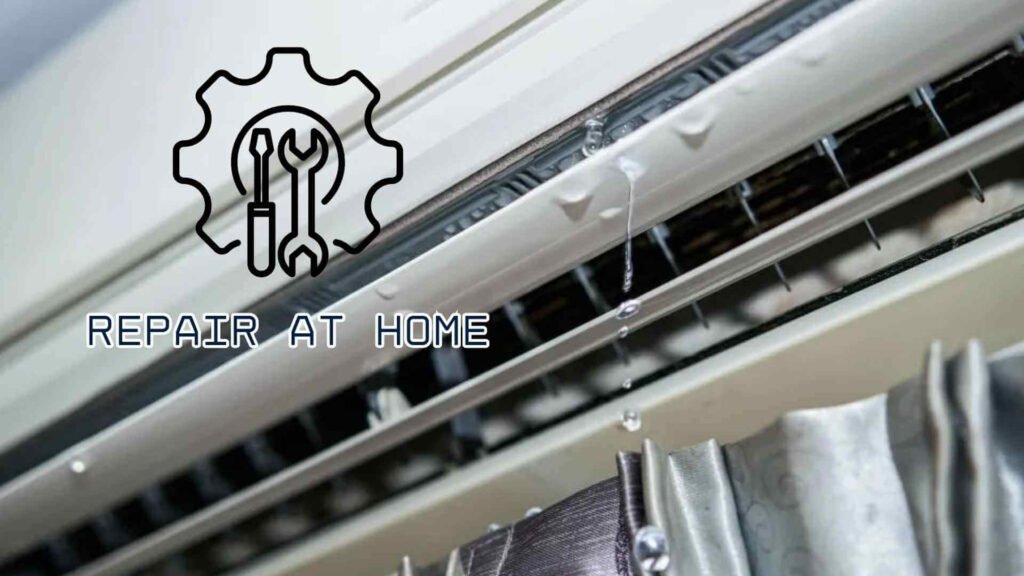
If you own a window air conditioner (AC), few things are more frustrating than seeing water dripping from the front of the unit — especially when it’s supposed to be keeping your home cool and dry. Not only can this create frustrating puddles and damage floor or window trim, but it may also signal underlying issues that could affect the efficiency or lifespan of your AC. Understanding why this happens (and how to fix it) can save you from unnecessary repair costs, mold growth, or water damage to your home.
Most often, a leak at the front of a window AC unit happens because the condensate (moisture collected during cooling) can’t drain properly — usually due to a clog, blockage, or improper drainage setup.
What’s the Simple Answer?
When a window air conditioner leaks water from the front, it’s usually because the built‑in condensation drainage system is being blocked or compromised, so the water accumulates and spills out where it shouldn’t.
Check Our AC Bill Calcator to Measure your Air Conditioner Monthly Running Cost.
Common Causes of Front-Leaking in Window AC Units
Poor Drainage — Why Condensation Must Exit Properly
Every AC, including a window unit, cools indoor air by removing heat — and as a byproduct, moisture (humidity) condenses on the cold evaporator coils. That moisture must go somewhere. In a proper setup:
- The water drips into a drain pan or tray.
- From there, it exits the unit through a drain hole or drain line (sometimes at the back or underside) so it can safely flow outside, away from walls or windowsills.
If this drainage path is blocked, broken, or incorrectly installed, water will build up — and eventually escape from the front, falling inside your room.
Key Drainage Problems
- Clogged Drain Hole / Drain Line: Dust, dirt, mold, or mineral build‑up can clog the drain hole/line. When blocked, condensation has nowhere to go → leaks.
- Overflowing or Damaged Drain Pan / Tray: If the tray is cracked, rusted, or misaligned, it can’t hold or channel water properly — causing overflows.
- Incorrect Unit Tilt or Installation: The unit needs a slight backward–downward tilt so gravity helps drain water out. If level or tilted the wrong way, water can pool instead of draining. Many guides for window ACs emphasize proper tilt to prevent leaks.
Other Common Contributing Factors
Restricted Airflow → Excess Condensation, Frozen Coils
A dirty air filter or blocked air intake severely reduces airflow across the evaporator coil. This has multiple domino effects:
- Poor airflow causes the coil to become overly cold — sometimes freezing.
- When the AC is switched off or the coil warms, that ice melts rapidly, producing more water than the drain system can handle — leading to overflow and leaks.
- Also, restricted airflow may cause condensation to form in odd places and not properly drip into the tray, increasing leakage risk.
So — a dirty filter, blocked vents, or poor circulation can indirectly trigger front leaks.
Refrigerant Issues and Coil Freezing
Lower-than-required refrigerant levels (or other malfunction in the refrigerant cycle) can cause the evaporator coil to get too cold, freeze up, and when thawed, dump a surge of water into the drain pan — causing it to overflow.
This is more commonly discussed in split AC/HVAC systems, but some window units may show similar behavior if their refrigerant charge is low or coils malfunction.
Drain Plug, Rubber Cap, or Plugged Outlet Problems (on Portable/Window Units)
Some portable or older window AC units use a drain plug or rubber stopper at the base/back to allow condensate to drain out. If that plug is loose, missing, or improperly seated — water might drip inside or out the front panel.
Troubleshooting & How to Fix a Front-Leaking Window AC
✅ Step-by-Step DIY Checks
| Step | What to Do | What to Look For / Fix |
|---|---|---|
| 1 | Turn off and unplug the AC unit. | Safety first — avoid electric shock when inspecting or dismantling. |
| 2 | Remove the front/grill panel. | Expose the interior: drain pan, coils, filter, tray. |
| 3 | Check the drain hole / drain line / plug. | Is the hole plugged, clogged, or blocked by debris? |
| 4 | Inspect the drain pan/tray. | Are there cracks, rust, or visible damage? Is water pooling instead of draining? |
| 5 | Check the unit’s tilt. | The back of the AC should sit slightly lower than the front to help drainage. |
| 6 | Check the air filter & airflow. | Is the filter dirty or clogged? Is the intake vent clear? |
| 7 | If safe and comfortable — clear the drain. | Use a thin wire, pipe cleaner, or flexible brush to clear buildup; or flush gently with warm water or vinegar (if recommended by your AC manual). |
| 8 | Test the drainage. | Pour a small amount of water into the pan — does it drain out? If yes, reassemble and test AC. If not, consider replacing tray or calling a pro. |
Many websites recommend using a wet/dry vacuum (on “wet” mode) at the drain line exit to suck out debris or clogs.
A gentle vinegar flush can help dissolve mold, algae, or mineral build-up — but only if the drain line is accessible and designed for maintenance.
When to Call a Professional
Some problems — like cracked drain pans, damaged internal trays, refrigerant‑related issues, or poorly installed/unleveled units — are not safe or practical for DIY. In such cases:
- If the water leak persists after cleaning drains and filters.
- If you find rusted or cracked metal parts inside the unit.
- If the AC is older, showing signs of frequent leaks or inefficient cooling.
- If there’s a suspected refrigerant problem, or coils freeze too often.
Calling a qualified HVAC technician helps ensure safe, correct, and lasting repair.
“Window AC drain hole clogged”
When the small drain hole gets clogged, the moisture has no escape route — and even a small blockage can cause “front‑leak” symptoms. It’s one of the single most common causes of leaking window ACs.
“Window air conditioner leaking inside / dripping water inside”
Indoor leaks (versus harmless outside condensation) almost always mean drainage is failing: either due to a blocked drain hole, faulty drain pan, or improper installation.
“Air conditioner frozen evaporator coil causing leak”
Frozen coils — often caused by dirty filters or poor airflow — are an underappreciated root cause. When the ice melts, water pours into the drain pan too quickly, leading to overflow and leaks.
Frequently Asked Questions (FAQ)
Can a dirty air filter alone cause the front of a window AC to leak?
Yes. A blocked air filter restricts airflow, which can freeze the evaporator coil. When the ice melts, excess condensate may overflow the drain pan and leak from the front.
How often should I check/clean the drain hole on a window AC?
It’s good practice to inspect and clean the drain hole or drain line at least once a season (before heavy use), or whenever you notice water leaking or slow drainage.
What if my AC doesn’t appear to have a drain hole?
Some newer or compact window‑unit designs may recycle condensate or use internal drainage — check your owner’s manual. If unsure, consult a technician.
I cleaned the drain and the filter — still leaking. Now what?
The drain pan or tray may be cracked/damaged, or the unit may be installed at the wrong angle. If so, you’ll likely need a professional inspection or part replacement.
Can freezing of the coils (low refrigerant) cause leaks even in window units?
Yes. If refrigerant is low or coils malfunction, the coil can freeze — when it thaws, it produces excess water, potentially causing overflow.
Is it safe to run the AC if it’s leaking water?
No. Running a leaking AC can further damage internal components or cause water damage to walls and floors. It’s best to turn the unit off until the problem is fixed.
How can I prevent future leaks from my window AC?
Regular maintenance — clean or replace filters monthly, inspect and clean the drain hole/line seasonally, ensure proper unit tilt, and keep the area around the unit clean and clear.
Summary
A window air conditioner leaking water from the front is rarely “just normal condensation.” In almost all cases, it signals a problem with drainage — a clogged drain hole or line, a damaged/overflowing pan, or improper installation. Other factors like dirty filters causing frozen coils, or low refrigerant, can also play a role.
The good news: many causes are easy to diagnose and fix yourself with basic cleaning and maintenance. But if cleaning doesn’t solve it — or if you see rust, cracked trays, or consistent leaks — it’s wise to call a professional. Keeping your window AC unit well-maintained will not only prevent leaks, but also extend the lifespan of the unit and maintain efficient cooling — which means lower energy bills and a more comfortable home.